Module 2 / Lesson 4.1
An Introduction to Three Categories of Ethical Systems
This lesson introduces the three primary frameworks philosophers use to determine right and wrong. As you read and watch the material below, consider which system you tend to use most often in your own life.
4.1.1 Learning guide
- Learning:
- Watch the core lesson video
- Review the material below, including the systems overview graphic
- Reflection: Reflect on which system feels most intuitive to you and which one you believe you rely on most often
4.1.2 Core Lesson: The Three Systems
Watch this video for an overview of the three major ethical traditions. The video uses the term Consequentialism, which is the broader category that includes Utilitarianism. For this course, we will often use these terms interchangeably.
4.1.3 The Three Systems at a Glance
Review this graphic for a summary of the three systems discussed in this lesson.
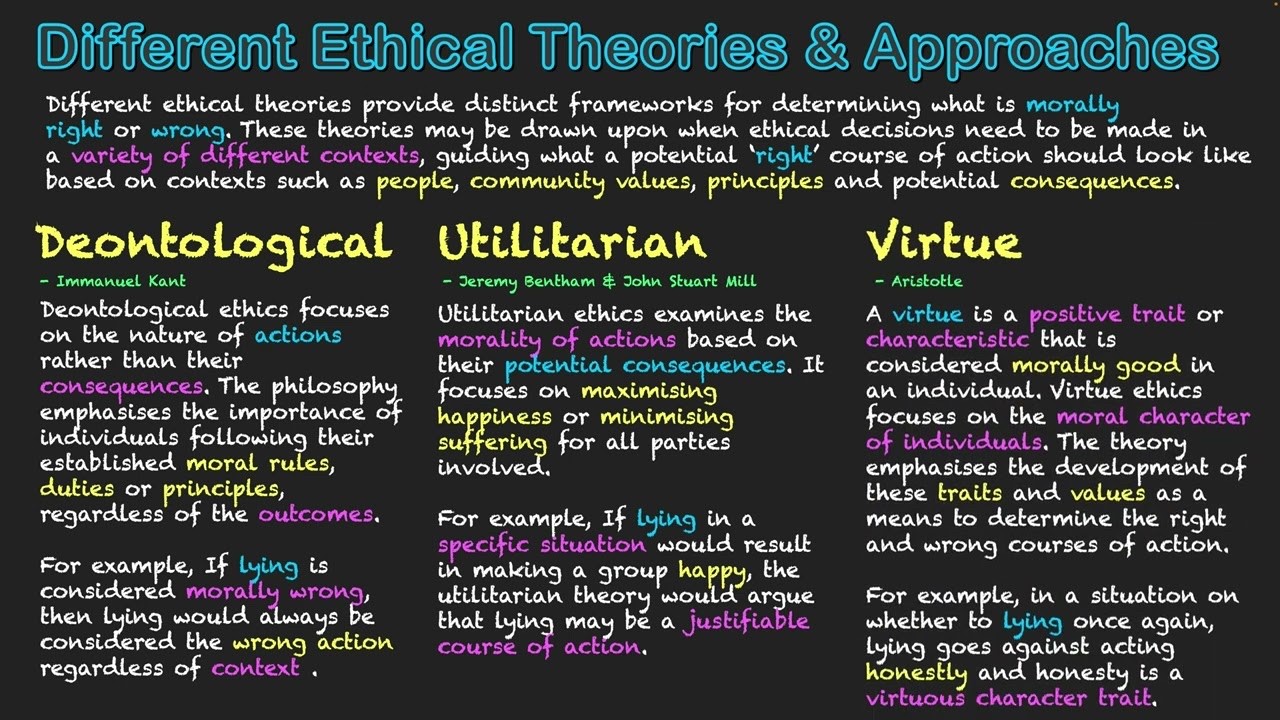
4.1.4 Key Concepts and Figures
This section summarizes the core ideas and major philosophical figures from each of the three systems.
Consequentialism (Utilitarianism)
- Core Idea: The moral value of an action is determined by its outcome or consequences
- Guiding Question: Which option produces the greatest good for the greatest number
- Key Figures: John Stuart Mill and Jeremy Bentham
Deontology
- Core Idea: Morality is based on duties, rules, and principles, independent of outcomes
- Guiding Question: Would I want everyone to follow this rule
- Key Figure: Immanuel Kant
Virtue Ethics
- Core Idea: Morality focuses on character and the qualities of a good person
- Guiding Question: What would a virtuous person do in this situation
- Key Figures: Aristotle and Plato
Your progress stays in this browser.